AC Maintenance in Hutto: Prevent Mold With Smart Moisture Control
Hutto summers don’t just test air conditioners, they test comfort. The real problem rarely shows up as “no cold air.” It shows up as the slow creep of humidity: that stale, slightly damp feeling when you walk into the house after work, the condensation streaks near a vent, the bathroom fan running longer than it used to, and that faint musty smell that comes and goes.
Most homeowners think mold is only a leak story, like a burst pipe or a roof problem. In practice, mold often starts from moisture the AC system creates and fails to remove. That’s why AC maintenance in Hutto is less about chasing a single temperature number and more about protecting the indoor moisture balance. When you keep the system tuned, you keep the coil cold long enough, dry enough, and consistently enough to prevent the conditions that mold likes.
If you want HVAC repair in Hutto or you are planning AC installation in Hutto, it helps to understand how moisture control works and what actually deserves attention during maintenance.
Humidity control is the hidden job your AC performs
An air conditioner is not only a “cooling” machine. It is a dehumidifier, whether you think of it that way or not. When indoor air passes over the evaporator coil, the coil is cold enough to drop moisture out of the air as condensation. That water drains away, and the remaining air becomes cooler and less humid.
The comfort trade is simple: if the coil does not get cold enough, or air does not move across it properly, that moisture does not condense reliably. The system may still blow cool air, but it starts behaving like a fan with a mild chill instead of a true moisture remover.
That is where trouble begins. Mold does not need standing water to start. It needs damp surfaces and the right amount of time. If your AC runs but the coil keeps “sweating” intermittently, if the drain line is partially blocked, if airflow is reduced by a dirty filter or clogged blower components, you end up with dampness somewhere in the system. Even if you do not see it, the conditions can still favor microbial growth on vulnerable surfaces like insulation, drip pans, and nearby duct lining.
In Hutto, humidity and heat work together. The longer the system cycles with poor dehumidification, the more opportunity you give moisture to hang around.
Why small maintenance issues can turn into mold risk
I’ve seen the pattern too many times: the homeowner notices a smell or slight dampness, then they find out the AC “seemed fine” because it produced some cold air. But the system was not doing its moisture job.
Here are a few maintenance-related failure points that commonly reduce moisture control performance:
Dirty return filters. A filter that is clogged or the wrong size can restrict airflow. Less airflow means the evaporator coil can run at a higher temperature. If the coil does not get cold enough to condense moisture consistently, humidity stays indoors. That can also raise energy use because the system struggles to maintain temperature.
Low refrigerant caused by a leak. If the refrigerant charge is off, coil performance suffers. The system might cool, but it may not produce the right condensation pattern. Also, a shortage or imbalance can cause erratic cycling that makes moisture removal inconsistent.
A clogged condensate drain or drain trap. This is a direct path to dampness. Even a partial clog can slow drainage, leading to a pan that sits too close to overflow conditions. Sometimes the overflow never happens as a big event. It can instead cause chronic moisture around the drain area and nearby materials.
Coil buildup. Dust and debris on the evaporator coil reduce heat transfer. The coil might not stay cold enough. It can also increase how long the system runs without properly removing moisture.
Blower and duct airflow issues. If the blower is dirty, worn, or misbalanced, air movement may be weaker than it used to be. Duct leaks or blocked returns can cause the system to run harder and still fail to move air correctly across the coil.
The key theme is consistency. Mold prevention depends on stable operation, not one good day of cooling.
A quick lived example from a real kind of call
A homeowner in Hutto described the problem in plain terms: “It smells like wet cardboard after the AC has been running.” The temperature felt okay, but the smell kept returning. We pulled the system history from their thermostat, checked airflow, and inspected around the indoor unit.
The coil and drain area told the story. The condensate drain was not fully blocked, but it was slow enough that the pan stayed damp longer than it should. The AC still cooled the space, so it never triggered the alarm bells most people associate with mechanical failure. But moisture lingered in the wrong place for too long.
Once the drain was cleared properly, the system was tuned to restore proper airflow across the coil, and the maintenance items were corrected, the odor faded. It wasn’t magic. It was moisture control working the way it was designed to work.
That’s the difference between “it runs” and “it manages humidity.”
The humidity comfort target you can actually feel
You can chase thermostat temperatures all day. But moisture control is about what you can feel on skin, notice in fabrics, and detect in the air.
When an AC is doing the moisture job well, you usually notice these signs:
- The air feels cooler even when the thermostat is set normally.
- Walls and windows do not develop condensation or recurring damp spots.
- Fabrics like curtains, upholstery, and carpet feel “dry,” not slightly clammy.
- The musty smell does not return after a few humid days.
When dehumidification is failing, you often see:
- Indoor air that feels sticky even with cool air blowing.
- Condensation on windows or a damp feeling on lower walls.
- Increased allergy-like symptoms or irritation that gets worse after long AC run times.
- Drain lines that produce odd gurgling sounds or slow draining that you can sometimes notice near the indoor unit area.
If your AC maintenance plan is only about temperature, it misses the part of the equation that actually protects your home from mold conditions.
What AC maintenance in Hutto should focus on for moisture control
Regular AC maintenance is not just a seasonal ritual. Done right, it becomes a moisture prevention program.
The most effective maintenance is the kind that checks performance, not only appearance. You want attention to how air moves, how the coil conducts heat, and how water exits the system.
In Hutto, I recommend thinking in terms of three zones: the filter and airflow path, the coil and its condensation behavior, and the condensate drainage system.
A professional HVAC contractor in Hutto should be able to explain what they are checking and why, and they should spot problems before you see them as wet drywall or recurring odor.
Here’s what that looks like in practice:
First, a service should address airflow. This means verifying filter condition and ensuring the blower and air paths are clear enough to move air across the coil correctly. If airflow is weak, the coil will not condense moisture in a predictable way.

Second, the evaporator coil should be inspected and cleaned when needed. Dirt on the coil can reduce moisture removal even if the system is otherwise functional. The goal is a clean heat transfer surface AC installation in Hutto that supports steady condensation.
Third, the condensate drain line and trap should be checked carefully. It is not enough to assume the drain “looks fine.” Slow clogs are common, especially in humid seasons where microbial growth can start inside the drain path.
Finally, refrigerant-related checks should be done with proper measurement. Refrigerant issues can quietly degrade performance and dehumidification, so the system may cool but not dry.
This is the kind of detail that makes a difference between HVAC repair in Hutto that simply restores cooling and AC maintenance in Hutto that prevents the recurring moisture conditions that invite mold.
The thermostat settings that can accidentally help humidity stick around
A lot of people unknowingly encourage higher indoor humidity through thermostat behavior. It usually happens in two ways: running the system in a mode that reduces dehumidification time, or using fan settings that keep air mixing without sufficient condensation.
If your thermostat has a “fan on” option, for example, leaving the fan running continuously can sometimes reduce the drying cycles the way you expect. Continuous fan can keep air moving while the system cycles less effectively, depending on setup and equipment. The right strategy depends on your system design and local humidity patterns.
I usually advise homeowners to pay attention to how the system behaves on the worst days, not just the first day it feels cool. If you set the thermostat slightly cooler and humidity drops noticeably, that suggests moisture removal is tied to run time and coil conditions. If the temperature changes but the air feels sticky and odors appear, the system may not be condensing moisture reliably.
That’s another reason moisture control should be part of every AC maintenance conversation, not a footnote.
When you should schedule service sooner than “when it breaks”
You do not always need to wait for a total failure to justify AC maintenance or HVAC repair. The earlier you act, the more likely you are to fix a moisture problem before it becomes a mold problem.
Here are a few red flags that should push you to schedule service:
- A musty or damp smell that comes back after the AC has been running for a while
- Condensation that appears around the indoor unit, near vents, or on nearby surfaces
- Slow or overflowing condensate drain behavior, including wet spots near the system
- Higher indoor humidity feel, even when the temperature seems acceptable
- Visible ice on the evaporator coil or sudden warm air that cycles oddly
If you notice any of these, treating it like “it will probably go away” can be a costly gamble.
Smart moisture control: what “good” performance looks like
A well-tuned system does a few things consistently.
It maintains stable airflow so the coil stays in the right operating range. It runs long enough to remove moisture without short cycling. It drains properly so condensation does not linger. And it does not rely on the homeowner to “make it work” with thermostat tricks.
In the field, one of the most telling signs is how often the indoor unit cycles compared to how the home feels. Short cycling can reduce dehumidification time because the coil spends less total time at the cold temperature needed to pull moisture out of the air. That can happen when the system is oversized for the home, when airflow is restricted, or when controls are not set up optimally for the installation.
On the other hand, long runtime alone is not automatically a good sign. If airflow or refrigerant conditions are off, the system may run longer but still not dry well. That is why the diagnostic side matters.
When you work with a trusted HVAC contractor like Jurnee Mechanical Heating & Air Conditioning, you should expect service that focuses on how the system performs across the season, not just whether it produces cold air at one moment in time.
Edge cases that homeowners miss
Not every mold-related symptom points to the AC. But the AC still plays a role more often than people realize.
Sometimes the underlying issue is a duct leak that pulls in humid air from unconditioned spaces, or a poorly sealed return path. If humid air is getting pulled into the system, the AC works harder to dry the indoor air, and it may struggle to keep up, especially during peak humidity periods.
Other times, the moisture source is the building itself. A crawlspace that stays damp, a basement with elevated humidity, or landscaping that directs water toward the home can all raise indoor moisture load. In those cases, the AC becomes part of the solution, but not the only one.
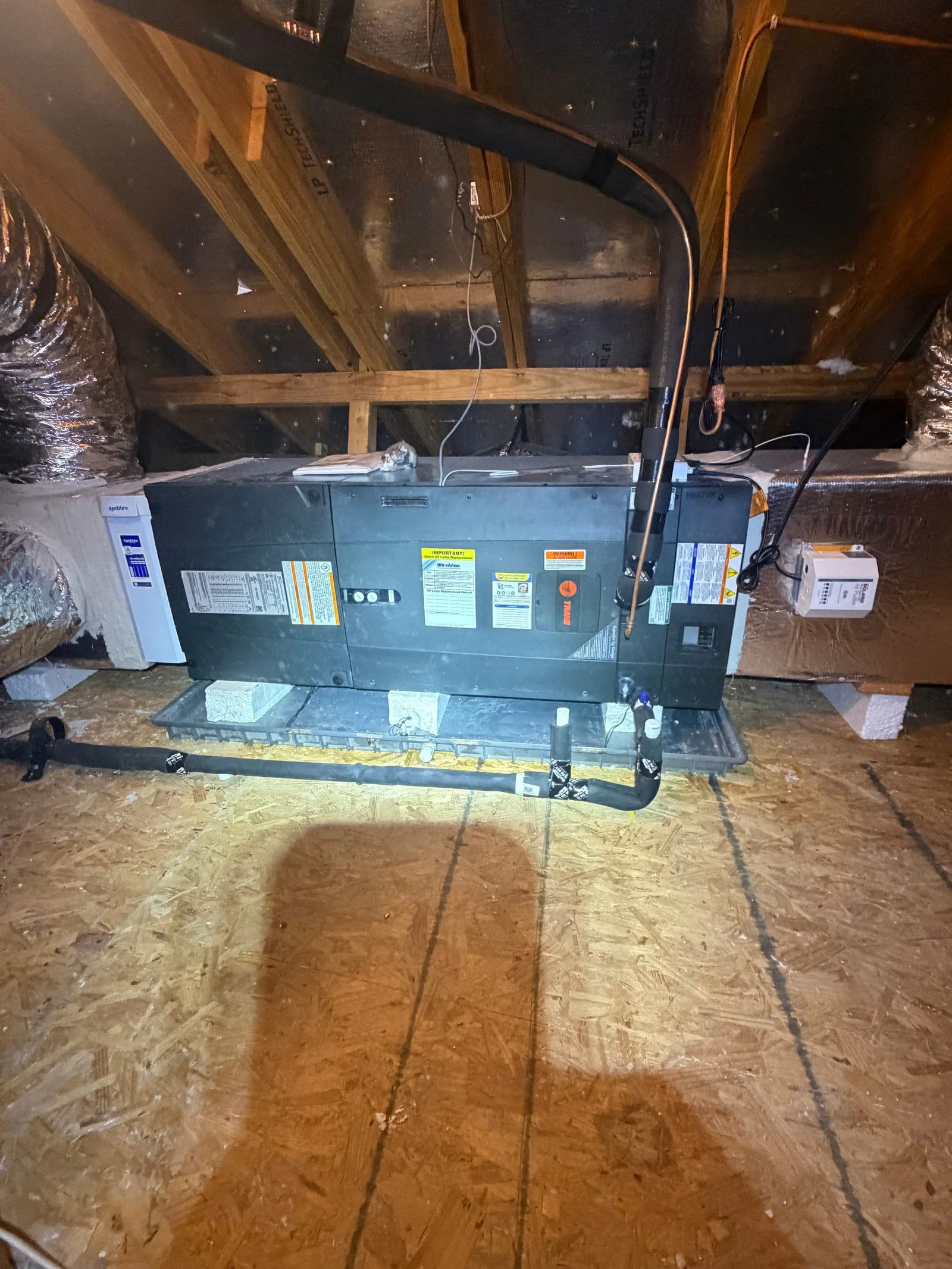
There are also situations where the condensate drain line is technically draining, but it drains into a place that cannot handle the water properly. A drain that discharges too close to wood framing or a foundation area that stays wet can still create a damp microclimate.
This is why “maintenance” should include inspection and judgment. A good contractor can separate an AC-only issue from a building-wide moisture problem.
What to ask when choosing an AC service provider in Hutto
You can do everything right with maintenance schedules, and still end up with poor results if the service is shallow. The best way to avoid that is to ask direct questions that reveal whether they think in terms of system performance and moisture control.
Here are a few questions worth bringing up:
- How do you evaluate airflow and coil performance during routine AC maintenance in Hutto?
- What steps do you take to inspect and clear the condensate drain and trap, especially before the humid season peaks?
- If humidity feels high even when cooling works, what diagnostic checks do you run to find the root cause?
- Do you verify system operation with proper measurements rather than relying on “it seems cold enough”?
- What maintenance plan do you recommend for the specific system and usage patterns in my home?
A professional HVAC contractor in Hutto should answer clearly and without hand-waving. If their explanations make you feel like they are guessing, you are probably paying for guesswork.
AC installation in Hutto and how sizing affects moisture
If you are considering AC installation in Hutto, moisture control should be part of the selection and design process. Oversizing is a common problem in cooling-only thinking. An oversized system can cool the home quickly, then shut off before it has time to remove enough moisture. The result is comfortable temperature but stubborn humidity.
A properly matched system helps the AC run long enough for dehumidification while not overheating the air. Equipment sizing is not the only factor. Airflow design, duct sizing, return placement, and thermostat setup all influence how moisture removal plays out.
This is where experience matters. A contractor who treats installation as “set the unit and connect the wires” will not give you the moisture stability you want. The best installs protect comfort, not just temperature.
Bringing it all together: prevention beats cleanup
Mold prevention is rarely about one dramatic repair. It is about removing the conditions that make mold possible.
Smart moisture control means your AC must condense moisture consistently, drain it safely, and keep the airflow and coil performance where they belong. When those systems are maintained, you reduce the damp surfaces and lingering moisture that mold needs.
That is why AC maintenance in Hutto is worth doing even when your system appears to be working. The performance you want is quiet and consistent, and it shows up in how your home feels on the humid days, not just how cold it gets.
If you are scheduling HVAC repair in Hutto, planning AC installation in Hutto, or simply trying to get ahead of moisture issues before they become something you have to remediate, reach out to Jurnee Mechanical Heating & Air Conditioning for service that treats moisture control as a core comfort function. Your home will notice the difference, and you’ll notice it too.
Jurnee Mechanical
209 E Austin Ave, Hutto, TX 78634
(737) 408-1703
[email protected]
Website: https://jurneemechanical.com/